Alexander Grodzinski
-
Gesamte Inhalte
14.361 -
Benutzer seit




.thumb.jpg.8b498a7ee733771cbd01bb62fe9f7b35.jpg)
Über Alexander Grodzinski

Letzte Besucher des Profils
66.074 Profilaufrufe

Leistungen von Alexander Grodzinski

Alter Forumshase (4/4)
2,2Tsd
Reputation in der Community
-
Zum bevorstehenden 30. Geburtstag von MillenniuM. Snow Files of the Week: "Big Yellow House/Exterminated" aus "MillenniuM", Episode "Pilot" (1996). Als die X-Akten in die vierte Staffel gingen, startete Chris Carters zweite Serie "MillenniuM". Die erste Folge erreichte die höchste Einschaltquote, die der Sender FOX je bei einer Pilot-Folge einer Serie verzeichnen konnte. Die Folge wurde sogar in ausgewählten Kinos gezeigt. Das Zuhause der Familie Black, das große gelbe Haus, ist ein Ort der Sicherheit für Frank Black. Hier kann er seiner Familie ein normales Leben bieten, abgeschirmt von der düsteren Welt da draußen, zumindest glaubt er das. Wenn man die Serie genau verfolgt, wird man feststellen, dass alle Szenen, die in oder um das gelbe Haus herum spielen, einen goldenen Schimmer haben, während der Rest in der "echten" Welt eher in ausgewaschene, düstere Farben getaucht ist. Mark benutzt eine Variation des Hauptthemas, um die Einführung des gelben Hauses zu untermalen. Seine sanften Streicher, kombiniert mit der Solo-Violine, erzeugen einen Ort des Friedens, aber spiegeln auch die Schrecken, die außerhalb warten, wieder. Die Stücke stammen vom ersten Set von LLL. Dieses wurde 2008 veröffentlicht und war zwei Jahre später ausverkauft. 2015 veröffentlichte LLL das Set noch einmal, limitiert auf 1.000 Stück. Viel Spaß beim Hören!
-
 Music by Lorne Balfe Limited edition of 1000 units ORDER NOW and get your CD booklet autographed by composer Lorne Balfe at no additional charge. Autographs are available only while supplies last and are NOT guaranteed. La-La Land Records and Paramount Pictures present an expanded and remastered 2-CD set of acclaimed composer Lorne Balfe’s (MISSION: IMPOSSIBLE FALLOUT, BEVERLY HILLS COP AXEL F), original motion picture score to the 2015 sci-fi/action thriller TERMINATOR GENISYS, starring Arnold Schwarzenegger, Jason Clarke and Emilia Clarke, and directed by Alan Taylor. The anticipated fifth installment of the famed TERMINATOR franchise called for a powerhouse score and composer Lorne Balfe charges forward with an expert, propulsive mix of electronics and orchestra, paying homage to Brad Fiedel’s original themes where it counts, while bringing in all-new thematic material that is notably emotional and optimistic. This expanded, remastered presentation allows Balfe’s work to shine in full, showcasing the composer’s versatility and unique voice. Produced by Stéphane Humez and mastered by Maxime Marion, this special CD release, limited to 1000 units, features the film score presentation over Two Discs, with an additional selection of “Suites and Themes” on the Second Disc. The exclusive, in-depth liner notes by writer Kaya Savas, with new comments from the composer. The art design is by Dan Goldwasser, featuring a reversible front cover. TRACK LISTING: DISC 1 SCORE PRESENTATION 1. Better Days* 3:06 2. Meet John Connor 4:02 3. Work Camp 3:38 4. I Volunteer* 2:06 5. Reese Going Back 3:50 6. Griffith Park* 2:56 7. Alley Confrontation (Extended Version) 3:52 8. Meet Sarah Connor & Pops* 1:40 9. T-1000 On The Prowl* 3:59 10. Still After Us (Extended Version) 5:08 11. 1997 Or 2017* 3:53 12. Alcove 2:18 13. Sarah & Reese Into TDD 2:04 14. Sarah’s Story 2:58 15. Time Travelers 1:23 16. John & Guardian Show Up 2:13 17. It’s Really Me* 2:37 18. Family (Extended Version) 2:22 19. I Am More (Extended Version) 4:29 TOTAL DISC ONE TIME 58:32 DISC 2 SCORE PRESENTATION CONTINUED 1. Cyberdyne 3:41 2. If You Love Me You Die (Extended Version) 6:31 3. Bus Ride (Extended Version) 4:03 4. Interrogation 2:03 5. Judgment Day (Extended Version)* 3:28 6. Cyberdyne Lobby 1:52 7. Come With Me 3:43 8. Fight (Extended Version) 3:29 9. Sacrifice (Extended Version)* 4:25 10. What If I Can’t? (Extended Version) 4:36 11. Terminated* 2:00 12. System Online 0:48 SUITES AND THEMES 13. John Connor 2:56 14. Sarah & Kyle 4:36 15. Guardianship 3:26 16. Sarah Kicks Ass 1:54 17. Fate And Hope 3:57 TOTAL DISC TWO TIME 57:29 TOTAL ALBUM TIME 116:04 * Contains an Interpolation of “The Terminator Theme” (From the Motion Picture The Terminator) Written by Brad Fiedel.
 -
LLLCD 1705 Music by Colin Stetson Limited edition of 1500 units ORDER NOW and get your CD booklet autographed by composer Colin Stetson at no additional charge. Autographs are available only while supplies last and are NOT guaranteed. La-La Land Records, Skydance and Apple Original Films present a limited-edition CD release of renowned composer Colin Stetson’s (HEREDITY, THE MENU), original motion picture score to the feature film action/comedy MAYDAY, starring Ryan Reynolds and Kenneth Branagh, and directed by Jonathan Goldstein and John Francis Daley. MAYDAY is a big, wildly entertaining Cold War 80s-era canvas of an action/comedy, with dynamic leads Ryan Reynolds and Kenneth Branagh radiating star-powered chemistry throughout. Composer Colin Stetson, who also performs most of the instruments heard here, fashions a wonderful and eclectic score that embodies and empowers all the film’s laughs, action, and character drama in surprising and effective ways. Propulsive where needed, but also subtle and emotional throughout, the score is an unconventional treat! Produced by Colin Stetson, this special CD release is limited to 1000 units. The art design is by Dan Goldwasser. TRACK LISTING: 1. Saving Boomer 1:56 2. The Mission 1:06 3. Blackbird 0:57 4. Liftoff 2:38 5. The view from up here 1:19 6. The Stranger 0:40 7. Moonshine 1:08 8. Making an escape 1:06 9. Do we have a deal? 2:13 10. Stakeout 1:15 11. The Heist 1:13 12. Soldiers on a train pt. 1 1:47 13. Soldiers on a train pt. 2 1:39 14. Anna 1:51 15. The Maz 2:19 16. Shaking the tail 1:21 17. Interrogation 3:33 18. Catching a flight 0:39 19. I must break you 2:51 20. Who’s flying the plane? 5:57 21. Wingman 2:05 TOTAL ALBUM TIME: 39:35
-
veröffentlichung Intrada: LITTLE DARLINGS (Charles Fox)
Alexander Grodzinski antwortete auf Steses Thema in Scores & Veröffentlichungen
Intrada announces the premiere release of Charles Fox's score to the 1980 Paramount film Little Darlings. Fox wrote a lyrical score featuring solo harmonica, harpsichord, guitar and orchestra. “It was a sweet picture,” Fox recalls today. “Two young girls, younger women going to camp and getting involved in love affairs and romance and all that. I was really proud of that score, frankly." Fox worked on two songs for the movie with lyricist Carole Bayer Sager—a main title theme, “Little Darlings,” and a romantic song, “You and Me and Summer.” Ultimately neither song made it past the demo stage, but the melodies became foundational for the score. “Little Darlings” is an upbeat number that establishes the mood and energy of light summer fun. “You and Me and Summer,” on the other hand, is a wistful, low-key tune with a classic hook, intended as love music for Ferris’ relationship with the camp counselor. The opening piano figure expands on an opening riff from the “Little Darlings” song and forms the basis and mood for a lot of the underscore in the film. Vocal demos of the two songs are included as well among The Extras to give listeners a sense of what could have been. The album was sourced from multi-track elements stored at Paramount, but they were showing their age. Co-producer Chris Malone did extensive restoration in creating this album along with co-producer Dan Goldwasser. The result is a perfect-sounding album in crisp stereo to a charming and bittersweet score that has been often overlooked. Jeff Bond's liner notes adorn the package along with cover design by Stéphane Coëdel and overall design by Kay Marshall. Check out the soundtrack trailer here. The film stars Tatum O’Neal, Kristy McNichol Matt Dillon, and Armand Assante and follows two teenage girls from different backgrounds who meet at summer camp and make a bet to see who can lose their virginity first. As they navigate peer pressure, friendship and growing up, they discover that love and relationships are more complicated than they expected. The film takes a more mature and sophisticated approach than what one might initially expect. THE SCORE 01. Little Darlings Main Title* (2:19) 02. Little Darlings* (2:32) 03. Bus Leaves/Bus Pulls Out After Fight (0:56) 04. Arrival At Camp* (1:13) 05. By The Lake (2:43) 06. Girls Spy On Boys Camp (0:28) 07. Girls Steal Bus (0:58) 08. Angel Looking At Randy (1:39) 09. Penelope Steals Machine (0:56) 10. Food Fight** (1:31) 11. Used To Think About Kissing* (1:45) 12. Make It Look Good (1:03) 13. Ferris And Callahan In Pool (1:06) 14. Ferris And Father On Bridge** (1:18) 15. Get In, Sucker* (3:05) 16. If I Were 21* (0:30) 17. Randy And Angel In Boathouse (3:36) 18. I’m Not A Woman (5:39) 19. Ferris And Angel On Swings (3:19) 20. Little Darlings End Titles* (2:18) Total Score Time: 38:54 THE EXTRAS 21. “You And Me And Summer” (Demo) (3:10) 22. Bathroom Source (1:47) 23. Ferris And Callahan In Pool (Alternate) (1:03) 24. Get In, Sucker (Alternate) (3:05) 25. Randy And Angel In Boathouse (Alternate) (1:44) 26. I’m Not A Woman (Alternate) (5:38) 27. Ferris And Angel On Swings (Alternate) (2:00) 28. “Little Darlings” (Demo) (2:54) Total Extras Time: 18:11 Total CD Time: 60:31 *not used in film **contains material not used in film -
Dragon’s Domain Records presents FRIDAY THE 13th: THE SERIES, featuring music composed and performed by Fred Mollin (FAST COMPANY, FOREVER KNIGHT, TEKWAR) for the supernatural horror fantasy television series, starring Louise Robey, Chris Wiggins, John D. LeMay and Steve Monarque. Created by Frank Mancuso Jr. and Larry B. Williams, the series ran for three seasons and 72 episodes, concluding on May 26, 1990. Originally conceived as THE 13TH HOUR, the program adopted the FRIDAY THE 13TH name to evoke its recurring themes of bad luck, evil and ancient curses. Despite its title and several behind-the-scenes creative connections, the series had no direct narrative relationship to the Jason Voorhees film franchise. Filmed in Toronto, FRIDAY THE 13th: THE SERIES developed a darker edge than much of contemporary television, combining a brooding Gothic atmosphere with unusually intense horror. Its anthology-like cursed-object stories allowed the series to move freely among psychological terror, monsters, witchcraft, revenge and the occult while maintaining the ongoing story of Curious Goods and its guardians. An essential part of the show’s atmosphere was the music of composer Fred Mollin, whose scores gave the series much of its ominous and haunting identity. Moving effortlessly between suspense, melancholy, supernatural dread and outright terror, Mollin’s music became an integral part of the strange and shadowy world behind the doors of Curious Goods. An early compact disc release from GNP Crescendo Records, Dragon’s Domain Records is excited to bring FRIDAY THE 13th : THE SERIES back to the marketplace in a 2 CD presentation, newly mastered by James Nelson at Digital Outland, reprising the liner notes from the original album release, along with a new afterward from the composer. Disc One contains the original soundtrack album released by GNP Crescendo Records. The program draws upon music from 13 episodes spanning the first two seasons of the series. Rather than presenting any single score in its entirety, the album was conceived as a musical overview of the program, bringing together many of the finest and most memorable moments Mollin selected from his work on the show. Disc Two expands the collection with substantial presentations from two especially significant episodes: “Coven of Darkness”, the second season finale and the two-part third season premiere, “The Prophecies.” Fred Mollin is an award-winning composer, record producer, songwriter, arranger, and multi-instrumentalist whose remarkably diverse career has encompassed popular music, film, television, and children’s recordings. Born in New York and raised musically in Toronto, Mollin first achieved international recognition when he co-produced Dan Hill’s 1977 hit “Sometimes When We Touch.” The recording earned him the Juno Award for Producer of the Year and launched an extensive production career that has included acclaimed projects with Jimmy Webb, America, Johnny Mathis, Kris Kristofferson, Lamont Dozier, Billy Ray Cyrus, Rita Wilson, and many others. A gifted multi-instrumentalist, Mollin frequently performs on his own productions, playing guitar, keyboards, bass, drums, and percussion while also contributing vocals and arrangements. His ability to move naturally among orchestral scoring, electronic textures, rock, country, pop, and intimate acoustic music has given his work a distinctive, highly personal voice. FRIDAY THE 13th: THE SERIES is a limited edition release. FRIDAY THE 13th: THE SERIES is expected to begin shipping the week of October 28th, 2026. CD 1 1. Friday The 13th: The Series Opening Titles (0:52) 2. The Inheritance" / “Tails I Live, Heads You Die” / “Wax Magic” (6:12) 3. Suite (From “The Baron’s Bride”) (8:39) 4. Suite (From “Badge Of Honor”) (11:23) 5. The Death Of Micki (From “Tails I Live, Heads You Die”) (2:19) 6. Suite (From “Symphony In B Sharp”) (5:32) 7. Suite (From “Brain Drain”) (3:53) 8. Suite (From “Eye Of Death”) (4:35) 9. Suite (From “What A Mother Wouldn't Do”) (4:47) 10. In The Basement (From “The Electrocutioner”) (2:16) 11. Suite (From “The Playhouse”) (9:25) 12. Suite (From “Wedding In Black” And “Bottle Of Dreams”) (6:39) 13. The End Of A Year (From “Bottle Of Dreams”) (1:51) 14. Friday The 13th: The Series Closing Credits (0:54) Total Time 72:38 CD 2 1. Friday The 13th: The Series Season 3 Opening Titles (0:47) 2. Suite (From “Coven Of Darkness”) (13:29) 3. Suite (Album Edit) (From “Symphony In B Sharp”) (4:10) THE PROPHECIES PARTS 1 – 2 04. Welcome to France / The First Murder (5:26) 05. Jack Stalks / The Beasts (6:06) 06. Blind Man / Ryan And Christine (1:44) 07. The Asylum Goes Crazy / Jack’s Fall (7:18) 08. Asteroth Takes A Dip / Ryan Possessed (8:58) 09. Ryan Sees the Nun / Ryan And Adele (5:06) 10. After the Murder / Asteroth And Ryan (4:54) 11. The Funeral (2:34) 12. Ryan, Christine And Asteroth (2:22) 13. Ryan’s Metamorphosis (8:15) 14. Good Triumphs Over Evil (4:32) 15. Ryan And Mom (A New Beginning) (1:08) 16. Friday The 13th: The Series Season 3 Closing Credits (0:59) Total Time 78:32 Dragon’s Domain Records presents LES BAXTER: THE HORROR COLLECTION, a compilation of music from several horror films from the composer’s extensive filmography. LES BAXTER: THE HORROR COLLECTION includes music composed by Les Baxter for CRY OF THE BANSHEE, BARON BLOOD and a suite of music from the AIP television special AN EVENING WITH EDGAR ALLAN POE. Airing on television in 1970, AN EVENING WITH EDGAR ALLAN POE featured the legendary Vincent Price reciting four classic stories from Poe, directed by Kenneth Johnson (THE BIONIC WOMAN, THE INCREDIBLE HULK) and music composed by Les Baxter. The suite includes music for The Tell-Tale Heart, The Sphinx, The Cask Of Amontillado and The Pit And The Pendulum. Released in 1970, CRY OF THE BANSHEE was directed by Gordon Hessler, written by Tim Kelly and Christopher Wicking, starring Vincent Price, Elizabeth Bergner, Essy Persson, Hugh Griffith, Sally Geeson, Robert Hutton, Patrick Mower, Hillary Heath, Carl Rigg, Stephan Chase and Marshall Jones. Price portrays Lord Edward Whitman, a ruthless Elizabethan witch hunter whose persecution of a coven unleashes a terrible supernatural vengeance. CRY OF THE BANSHEE received a new score from Baxter for its American theatrical release after AIP rejected the original music by Wilfred Josephs. Strings, percussion, and piano combine in jagged rhythmic patterns, violent accents, and unsettling repetitions, creating a musical atmosphere that is as unpredictable as the supernatural forces stalking Whitman and his family. Released in 1972, BARON BLOOD was directed by Mario Bava, written by Bava, Willibald Eser and Vincent Fotre, starring Joseph Cotten, Elke Sommer, Massimo Girotti , Rada Rassimov, Anotnio Cantafora, Umberto Raho, Luciano Pigozzi, Dieter Tressler, Nicoletta Elmi, Gustavo De Nardo and Valeria Sabel. Also known as GLI ORRORI DEL CASTELLO DI NORIMBERGA, BARON BLOOD follows Joseph Cotten as the sinister Baron Otto von Kleist, a sadistic nobleman whose murderous legacy is awakened when his descendant returns to the family castle and an ancient incantation is read aloud. For the American market, AIP shortened the film, altered some scenes, redubbed the dialogue and substituted Les Baxter’s music for Stelvio Cipriani’s score. Baxter’s score is one of the most distinctive aspects of the AIP version. Rather than simply preserving Cipriani’s music, AIP gave American audiences a more overtly ominous, traditional horror-movie sound. Born in Mexia, Texas, Les Baxter studied piano at the Detroit Conservatory of Music and later at Pepperdine College in Los Angeles. He began his professional career as a musician with the Freddie Slack big band and later sang with Mel Tormé’s Mel-Tones. Baxter established himself as an arranger and conductor at Capitol Records, working with major artists including Nat King Cole. In the late 1940s, he pioneered the emerging “space age” sound with MUSIC OUT OF THE MOON, an innovative recording featuring the theremin. During the 1950s, he became one of the principal architects of exotica, creating lush, highly orchestrated fantasies inspired by Polynesian, African, Asian, and Latin American musical colors. At the same time, Baxter was an extraordinarily prolific composer for the screen. He ultimately wrote music for more than 250 radio, television, and motion-picture projects, with a particularly large body of work in horror and science-fiction films. His association with American International Pictures produced scores for such films as THE PIT AND THE PENDULUM, THE DUNWICH HORROR, THE MAN WITH THE X-RAY EYES and numerous other genre productions. LES BAXTER: THE HORROR COLLECTION includes music that has previously been released but has been remastered by James Nelson at Digital Outland, including liner notes by G.B. Kemner. LES BAXTER: THE HORROR COLLECTION is a limited edition release and is expected to begin shipping the week of October 26th, 2026. AN EVENING WITH EDGAR ALLAN POE (1970) 01. The Pit And The Pendulum (7:07) 02. The Sphinx (5:05) 03. The Cask Of Amontillado (4:48) 04. The Tell-Tale Heart (7:09) CRY OF THE BANSHEE (1970) 05. Lord Edward Whitman (2:12) 06. Witches’ Black Sabbath / Summoning The Demon (8:03) 07. What Is Born In Fire, Dies In Fire (7:16) 08. Carriage Ride To Hell (2:06) BARON BLOOD (1972) 09. The Legend Of Baron Blood (4:41) 10. The Incantation (5:32) 11. Peter And Eva Go To The Castle / The Summoning (4:35) 12. Spirits From The Netherworld / The Amulet (4:19) 13. The Undead Destroy The Baron / Finale (6:27) Total Time: 69:57 Dragon’s Domain Records, to be distributed through buysoundtrax.com, presents the premiere release of EXTREMITIES, featuring music from the original score composed by J.A.C. Redford (ST. ELSEWHERE, A TRIP TO BOUNTIFUL, CONAGHER) for the 1986 psychological thriller directed by Robert M. Young, written by William Mastrosimone, starring Farrah Fawcett, James Russo, Alfre Woodard, Diana Scarwid, Sandy Martin, Eddie Velez, Tom Everett and James Avery. Released in 1986, EXTREMITIES was adapted from the acclaimed stage play by William Mastrosimone, who also wrote the screenplay. The original play generated enormous controversy because of its disturbing themes and graphic depiction of violence against women. Yet beneath its shocking surface was a serious examination of fear, empowerment, and the moral consequences of revenge. The motion picture retained much of the claustrophobic intensity of the stage production. Fawcett plays Marjorie, a young woman living in Los Angeles with two roommates (Alfre Woodard and Diana Scarwid). She survives a terrifying attempted sexual assault at the beginning of the story. The attacker, Joe (Russo) abducts and nearly murders her before she manages to escape. Marjorie is left emotionally shattered, consumed by paranoia and fear that the man may return. Her roommates try to support her, but they cannot fully grasp the depth of the psychological damage she has suffered. Joe is able to track Marjorie to her home and assault her again because she had left her purse behind during her escape. This time, however, she manages to gain the upper hand by blinding him with wasp repellent and turns the tables on him. She imprisons him within her fireplace and begins psychologically and physically tormenting him while debating whether to castrate him... Fawcett’s performance has been widely praised for its courage and intensity — earning her a Golden Globe nomination. The score by J. A. C. Redford plays a subtle but highly effective role in shaping the film’s oppressive atmosphere. Rather than overwhelming the drama with aggressive thriller music, Redford composed a restrained and unsettling score that emphasizes psychological tension and emotional fragility. J.A.C. Redford is a composer, arranger, orchestrator and conductor of concert, chamber and choral music, film, television and theater scores, and music for recordings. Redford has written the scores for more than three dozen feature films, TV movies or miniseries, including THE TRIP TO BOUNTIFUL, ONE NIGHT WITH THE KING, WHAT THE DEAF MAN HEARD, MAMA FLORA’S FAMILY and Disney’s OLIVER & COMPANY, NEWSIES and THE MIGHTY DUCKS II and III. He has composed the music for nearly 500 episodes of series television, including multiple seasons of COACH and ST. ELSEWHERE (for which he received two Emmy nominations). Collaborating with other artists, Redford has orchestrated, arranged or conducted for Academy Award-winning composers, James Horner, Alan Menken, Randy Newman and Rachel Portman and John Williams, as well as for Terence Blanchard, Danny Elfman, Simon Franglen, Mark Isham, Thomas Newman, Marc Shaiman, and Cirque du Soleil’s Benoit Jutras, on projects including , and m THE LITTLE MERMAID, THE NIGHTMARE BEFORE CHRISTMAS, THE PERFECT STORM, WALL-E, AVATAR, SKYFALL, BRIDGE OF SPIES, 1917 and most recently AVATAR: THE WAY OF WATER, A MAN CALLED OTTO, and ELEMENTAL. He orchestrated and conducted Adele’s Oscar-winning title song for SKYFALL, wrote arrangements for Joshua Bell’s VOICE OF THE VIOLIN, AT HOME WITH FRIENDS and MUSICAL GIFTS recordings, Anne Akiko Meyers’ SERENADE: THE LOVE ALBUM and has written for and recorded with other Grammy Award-winning artists Steven Curtis Chapman, Bonnie Raitt and Sting. Dragon’s Domain Records presents EXTREMITIES, featuring music composed by J.A.C. Redford for the first time on compact disc. The music has been mastered by James Nelson at Digital Outland and the liner notes have been written by Scott Davis. EXTREMITIES is a limited edition release. EXTREMITIES is expected to begin shipping the week of October 28th, 2026. 01. The Stalking Man (2:07) 02. Descent Into Darkness (2:04) 03. Pluto Denied / Night (1:52) 04. Marjorie’s Morning Song (2:58) 05. Honey / Invite Me In (2:54) 06. The Bed (4:19) 07. The Bathroom / The Refrigerator / Popcorn (3:23) 08. It Doesn’t Have To Be This Way / Turning The Tables (5:46) 09. I Get Out, I Get You / Choose (4:17) 10. Cherry Cheesecake / One Slice / Waiting For Teri (4:19) 11. The Knife (3:37) 12. Thank You (4:28) 13. End Credits (3:06) 14. Show Me The Way (Original Demo) (2:56) Total Time: 48:43 Dragon’s Domain Records presents THE ALBERT GLASSER COLLECTION, VOLUME 9: HORROR. The 1950s were Albert Glasser’s busiest as a film composer, scoring many films across multiple genres. With this ninth collection of the composer’s music, we are pleased to explore two films focusing on horror that Glasser scored in the late 1950s: ATTACK OF THE PUPPET PEOPLE and GIANT FROM THE UNKNOWN. Released in 1958, GIANT FROM THE UNKNOWN was directed by Richard E. Cunha, written by Frank Hart Taussig and Ralph Brooke, starring Ed Kemmer, Sally Fraser, Bob Steele, Morris Ankrum, Oliver Blake, Jolene Brand, Billy Dix, Gary Crutcher and Buddy Baer as the Diablo Giant. Set in a rural California community overshadowed by local superstition and fear, GIANT FROM THE UNKNOWN begins with a string of mysterious livestock killings blamed on an ancient Native American curse. Local resident “Indian” Joe (Dix) warns the townspeople that the region is haunted by the spirit of a murderous giant executed generations earlier for crimes against Native Americans during the Spanish colonial era. Skeptical archaeologist Dr. Cleveland (Kemmer) and his daughter Janet (Fraser) investigate the legend while researching the historical presence of conquistadors in the area. Their discoveries eventually uncover the terrifying truth: the so-called “Diablo Giant” is a gigantic armored Spaniard who has somehow survived for centuries and now stalks the countryside killing anyone who crosses his path... Also released in 1958, ATTACK OF THE PUPPET PEOPLE was directed by Bert I. Gordon, written by George Worthing Yates and Gordon, starring John Agar, John Hoyt, June Kenney, Michael Mark, Jack Kosslyn, Marlene Willis, Ken Miller, Laurie Mitchell, Scott Peters, Susan Gordon, Jean Moorhead and Hal Bogart. ATTACK OF THE PUPPET PEOPLE follows Sally Reynolds (Kenney) as she accepts employment as secretary to the soft-spoken but unnervingly possessive Franz (Hoyt), whose office and private quarters are filled with eerily realistic dolls displayed in glass cases. When Sally’s fiancé Bob Westley (Agar) mysteriously disappears, she begins to suspect Franz after noticing that one of the figurines bears an uncanny resemblance to Bob himself. Her fears deepen when she learns that Franz’s former secretary (Moorhead) vanished under similarly suspicious circumstances. The police initially dismiss Sally’s increasingly frantic claims, believing stress and imagination are clouding her judgment. But Franz’s horrifying secret is eventually revealed: using a shrinking device of his own invention, he miniaturizes people and keeps them imprisoned in suspended animation as permanent companions who can never leave him. When Sally threatens to resign, Franz subjects her to the same fate. Believing his tiny captives helpless, Franz revives Bob and several others to keep Sally company. Unfortunately for him, the miniature prisoners soon realize that their combined intelligence and determination may finally allow them to escape and turn the tables on their gigantic captor... Born January 25, 1916, Albert Glasser was a composer, conductor and arranger of film music. One of the most prolific B-movie composers, Albert Glasser started off as a copyist in the music department at Warner Brothers in the late 1930s, learning the art of film scoring from scratch while working under Max Steiner and Erich Wolfgang Korngold. He graduated to orchestrating, and by the mid-1940s was composing his own scores. He scored approximately 200 films during his career, many for American International Pictures and director Bert I. Gordon. For the US War Department, Glasser composed for Frank Capra's Special Services Unit and for Office of War Information radio shows for overseas broadcasts. For television, he composed the score for THE CISCO KID. For radio, he composed scores for HOPALONG CASSIDY, CLYDE BEATTY, and TARZAN. Dragon’s Domain Records presents THE ALBERT GLASSER COLLECTION VOLUME 9: HORROR, featuring the premiere release of original music composed by Albert Glasser for ATTACK OF THE PUPPET PEOPLE and GIANT FROM THE UNKNOWN, mastered by James Nelson at Digital Outland. The booklet contains liner notes written by noted author David Hirsch. THE ALBERT GLASSER COLLECTION VOLUME 9: HORROR is a limited edition release and is expected to begin shipping the week of October 28th, 2026. 01. Main Title (From “Giant From The Unknown”) (1:39) 02. Eavesdropping / Devil’s Crag / Trip To The Burial Grounds (1:45) 03. Early Risers / Joe Takes A Shot / Fruitless Searching (2:53) 04. Very Strong Reading / Finding The Site / Waking The Sleeping Giant (3:04) 05. Romantic Moonlight Stroll, Peeping Vargas (2:56) 06. Intruder / Anne Can’t Take Care Of Herself (2:52) 07. Indian Joe Is Dead / Janet Abducted (3:47) 08. Taking The Sheriff’s Car / Vigilantes (1:56) 09. Wayne Rescues Janet (2:26) 10. Shootout / Boxed In / Back To Camp (4:39) 11. “Tracking The Giant, Is A Man’s Job” (3:23) 12. Giant Fight / Finale (2:59) 13. Main Title Alternate (From “Giant From The Unknown”) (1:36) 14. Lodge Restaurant Source (Unused) (2:42) 15. Giant From The Unknown (1958) Theatrical Trailer (1:41) 16. Overture / Janet (3:01) 17. Mail Bag / The Torn Letter (1:05) 18. Puppet Dance / Shrunken Beau (2:35) 19. Burning A Doll (2:15) 20. Party #1 Source (2:16) 21. You're My Living Doll (Instrumental) (1:02) 22. Party #2 Source (3:27) 23. Celeste Dolly / Goodbye, Emil / Going To A Theatre Party (4:18) 24. Mr. Hyde / Escape / “Don’t Run From Me” (1:58) 25. 2nd And Main / Freight Entrance (2:53) 26. Finale (1:13) 27. You’re My Living Doll (1:02) (Vocal: Marlene Willis) 28. Escape (Alternate) (0:32) 29. Burning A Doll (Theremin) (1:07) 30. Doll Maker Machine F/X (0:31) 31. Party #3 Source (M51 Unused) (3:43) 32. The Tuning Fork (1:03) 33. Attack Of The Puppet People (1958) Theatrical Trailer (2:06) Total Time: 77:52
-
THE X-FILES Reboot - Ludwig Göransson
Alexander Grodzinski antwortete auf Alexander Grodzinskis Thema in Filmmusik Diskussion
Für mich bräuchte es kein Reboot. Lasst die X-Akten in Frieden ruhen Einer der Gründe, warum es so etwas Besonderes war und wir auch 30 Jahre später noch darüber sprechen, ist, dass es damals in den 90ern eine Revolution im TV war. Die Art der Geschichten, wie es erzählt wurde, die Charaktere, die Musik, all das war wie eine Initialzündung. Das kann man nicht einfach kopieren. Damals waren die X-Akten ein Ereignis. Ein Reboot ist nur eine weitere Serie unter unzählig neuen, die gefühlt jede Woche veröffentlicht werden. Ryan Coogler hätte eine neue Serie mit neuem Titel machen können, die im Geiste der X-Akten funktioniert. J.J. Abrams hat das im Grunde mit FRINGE schon gemacht. Aber klar, für Disney zählt natürlich der Franchise-Charakter, weshalb der Titel sein muss. Aber es ist ja schon klar, dass es neue Hauptcharaktere geben wird. Wobei es scheinbar durchaus Pläne gibt, Mulder und Scully doch irgendwie zu involvieren und sei es nur als Cameo. Ansonsten ist aber wohl niemand von der Ur-Serie hinter der Kamera dabei, auch Chris Carter nicht. Es sind also neue Produzenten und neue Autoren. Ein Neustart ist hier auch das einzig sinnvolle. Ich bin gespannt, ob sie die Titelmelodie behalten und Göransson die nur modernisieren darf oder ob man auch musikalisch ganz andere Wege geht. -
THE X-FILES Reboot - Ludwig Göransson
Alexander Grodzinski erstellte ein Thema in Filmmusik Diskussion
Das X-Files-Reboot von Ryan Coogler schleppt sich zwar weiter dahin (es wurde bisher nichts gedreht), aber nun wurde mit Ludwig Göransson zumindest der Komponist für den Piloten bekanntgegeben. -
Snow Files of the Week: "Bloody Jacuzzi/Old Files/Blood/Blood In The Loaf/Just Ashes And Bones" aus The X-Files, Episode "3" (1994). Der Vater, der Sohn und der Unheilige Geist. Drei dunkle Gestalten, vielleicht Vampire, machen die Nächte unsicher. Die Episode beginnt mit einem älteren Geschäftsmann, der in seinem Haus in den Hollywood Hills von einer mysteriösen Frau verführt wird, während draußen im Canyon die Waldbrände lodern und den dunklen Nachthimmel rot erhellen. Der Track "Bloody Jacuzzi" zeigt Mark wieder einmal als Meister wundervoller Pianothemen. Er benutzte das Thema auch in dem TV-Film CAROLINE AT MIDNIGHT aus dem gleichen Jahr. Mulder untersucht den Fall alleine, da Scully in der Folge zuvor entführt wurde. Sie ist nun selbst eine X-Akte geworden, die Mulder in den Schrank zu den restlichen X-Akten stellt ("Old Files"). Bemerkenswert an der Folge ist, dass Mark den Anfang des X-Files-Themas immer wieder in seinem Score benutzt. Das Thema taucht tatsächlich nicht oft in den Episoden-Scores der Serie auf, weshalb es schon etwas Besonderes ist. Diese Tracks stammen vom dritten Set X-Files-Musik von LLL. Das Set ist auf 3.000 Exemplare limitiert. Viel Spaß beim Hören!
-
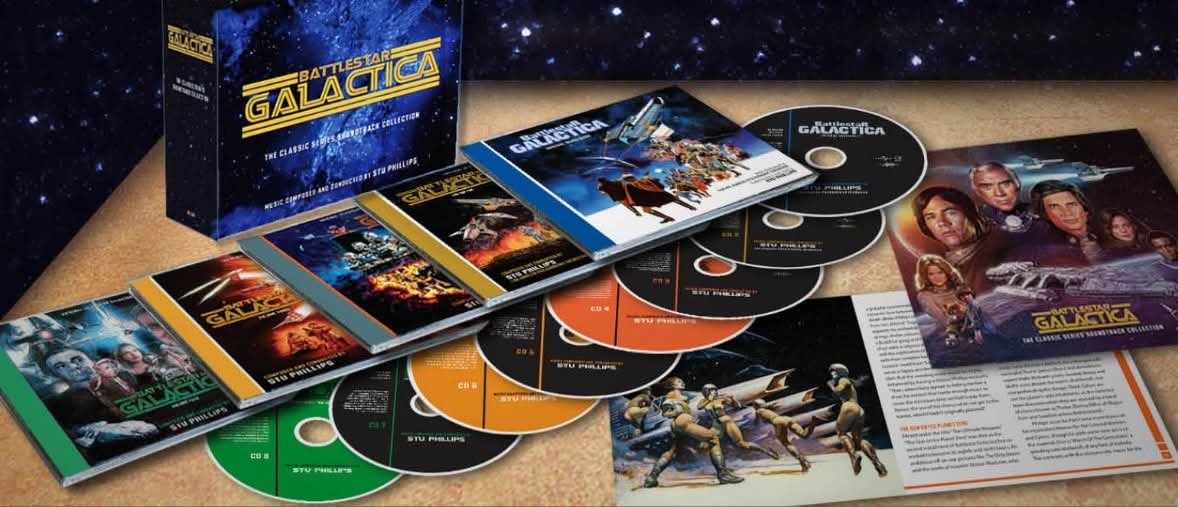
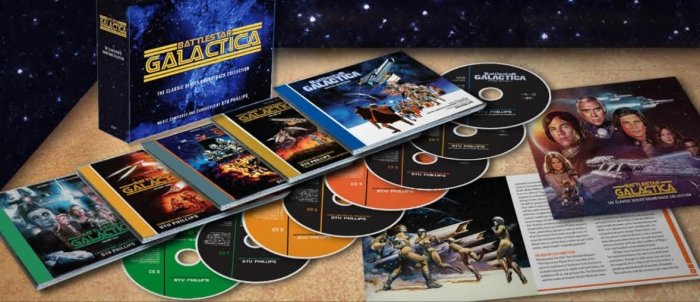
INTRADA Announces: BATTLESTAR GALACTICA The Classic Soundtrack Collection Music Composed by STU PHILLIPS Intrada proudly presents Battlestar Galactica: The Classic Series Soundtrack Collection, a comprehensive 8-CD set of the legendary music by Stu Phillips for the original 1978–1979 film and television episodes, along with select material from the sequel series, Galactica 1980, all fully restored and remastered. Intrada previously released four volumes of Battlestar Galactica in 2011–2012 that have been long out of print. This new set includes some notable updates, the most significant of which is the integration of recently discovered material from the studio vaults. Also included now is the 1978 MCA Records album (remastered from original elements) along with alternate and cover versions of the song “It’s Love, Love, Love,” a disco arrangement of the main theme, and a special arrangment by Stu Phillips for the Boston Pops album Out of This World, conducted by John Williams. The entire collection has been produced with the generous cooperation of Universal Music Enterprises and Universal Studios. Combined with the extras for the Original Soundtrack Album, this collection presents 86 minutes of previously unreleased material. GRAMMY®-nominated producer Mike Matessino has undertaken a ground-up restoration of all elements, correcting speed, incorporating previously missing overlays, and applying state-of-the-art technology for the clean-up and mixing of all music into a seamless presentation. All work was done in consultation with the composer himself. Premiering on this release is music for the episodes Fire in Space and The Man With Nine Lives, as well as significant additions for Lost Planet of the Gods, Gun on Ice Planet Zero, The Lost Warrior and several other episiodes. The collection closes with some previously unreleased music from Galactica 1980 episodes Galactica Discovers Earth and The Night the Cylons Landed, which includes “Turbine Lift Off,” the oft-requested music for the show’s infamous flying motorcycles that allowed Phillips to give his Galactica theme the rock-and-roll treatment. Battlestar Galactica: The Classic Soundtrack Collection runs 9 hours and 22 minutes across 8 discs. The set is housed in an evocative and durable glossy cardboard box designed by Joe Sikoryak and contains 5 jewel cases and a separate 52-page book with new double-panel cover art by Paul Shipper. The book features a new foreword by producer Mike Matessino and extensive notes written by John Takis, expanding on the older releases with deeper explorations of the scores and new revelations from the composer about the process of creating the music. The jewel case booklet for the first disc, containing the 1978 album recording, offers flipper art of original Galactica posters with notes from series creator Glen A. Larson and Stu Phillips on the inner pages. Art direction is by Kay Marshall with contributions by Stepháne Coedel, with all of the booklets featuring numerous photos along with conceptual and promotional art created for the series. The music for Battlestar Galactica continues to stand as a milestone in the annals of television music, now preserved and celebrated with this definitive collection. Retail Price: $139.99
-
INTRADA Announces: JAWS 2 Music Composed and Conducted by JOHN WILLIAMS Intrada announces a fully remastered 2-CD edition of the first sequel score ever composed by John Williams: Jaws 2. Released in cooperation with Universal Studios and Universal Music Enterprises (UMe), this release presents a ground-up restoration, remix and remastering from the first-generation multi-track scoring elements. Arriving a year after Williams’ Star Wars and Close Encounters of the Third Kind fully unfettered the symphonic film score, Jaws 2 builds on the iconic shark motif from the classic original and expands into a dynamic exploration of the joys and terrors of the sea in iconic Williams style. Intrada derived its previous release (2015) from 3-track masters provided by Universal Studios, but this time, as a result of a deep dive (we couldn’t resist) ahead of last year’s 50th anniversary of the original Jaws, we discovered that the 16-track scoring masters for the sequel were housed in the vaults at UMe. The record company provided new high-resolution transfers at 192k/24-bit, which were then meticulously restored, remixed and remastered by Mike Matessino and approved by the composer. This 2-CD set once again presents the complete score, plus bonus material (including some newly discovered alternates), and, on CD 2, a fully rebuilt version of the 1978 original soundtrack program. The accompanying 20-page booklet offers an updated version of Scott Bettencourt’s essay from 2015 and presents a new “Tech Talk” section by Matessino. Simultaneously with Intrada’s release, UMe/Geffen will be offering the original album program in Digital Dolby Atmos, mixed by Steve Genewick, as well as a “2026 Mix” digital stereo soundtrack album in high resolution. The website jaws50music.com now has a Jaws 2 tab with information about these releases. Meanwhile, Matessino’s remix and remastering of the original Jaws soundtrack recording is now available on a new LP pressing from Geffen/Interscope.
-
Marks langjähriger Music Editor Jeff Charbonneau, der auch immer wieder selbst Musik beisteuerte und zuletzt am Director's Cut von I WANT TO BELIEVE gearbeitet hat, ist nun leider auch verstorben. Jeff Charbonneau passed away last week, according to XFilesNews. He was the music editor for everything Ten Thirteen produced: #TheXFiles from the pilot all the way to the revival seasons; #Millennium; Harsh Realm; The Lone Gunmen; the two TXF movies; even Carter’s pilot for The After. The Vrach Frankenshteyn director’s cut was the last thing he worked on. He was one of the foundations of all of Ten Thirteen and one of those figures behind the scenes that didn’t get a spotlight but were important. Our thoughts are with his family. Jeff worked with the sound effects team and music mixer Larold Rebhun to balance music and sound, creating the shows’ unique atmospheres. A close collaborator of composer Mark Snow, who passed away last year, he edited Mark’s music into the episodes, did some arrangements and occasionally contributed with music himself. Most memorably, he composed the music in 4X13: Never Again where Scully gets her tattoo (and found on La-La Land’s TXF Volume 4). Just looking at his Ten Thirteen work, he won two Emmy Awards for sound editing for The X-Files and got nominated three more times, plus once for Millennium. He also worked on many other shows, such as 24, Homeland (both with ex-TXF alumni Alex Gansa and Howard Gordon, and Larold Rebhun), Love, Death + Robots… not to mention his film work: Dazed and Confused, Seven Years in Tibet… Jeff had a rich background, well-travelled, studied film and anthropology, a performing musician and an acrobat, and was an accomplished photographer. Jeff Charbonneau and Eliza French collaborated together on peculiar photography projects that I can only describe as surreal gothic fantasy by way of Jean Cocteau and the Quay Brothers. Below is a small selection of their work. Personally, I find them very enchanting and intriguing! See more at their website is Seven Sisters Asleep. https://www.sevensistersasleep.com/
-
Snow Files of the Week: "Trying to connect/True Feelings" aus dem Film "Private Fears in Public Places" (2006). Ein Score wie geschaffen für verschneite Wintertage. Es war die erste Zusammenarbeit zwischen Mark und dem legendären französischen Regisseur Alain Resnais. Drei weitere Male arbeiteten sie noch zusammen, bevor Resnais Anfang 2014 leider verstarb. Der Film erzählt die Geschichte verschiedener Menschen in Paris, die auf der Suche nach Liebe sind, jeder auf seine Weise. Die melancholische Stimmung des Filmes, in dem es ständig schneit, gab Mark die Gelegenheit einen seiner schönsten Scores zu schreiben. Beim Schnitt wurde der Film mit Musik aus "The X-Files" und "MillenniuM" unterlegt, weshalb es nicht weiter verwunderlich ist, dass es Ähnlichkeiten in Marks finalem Score gibt. Ein Album mit der Musik wurde von BSX veröffentlicht, limitert auf 1.000 Stück. Viel Spaß beim Hören!
-
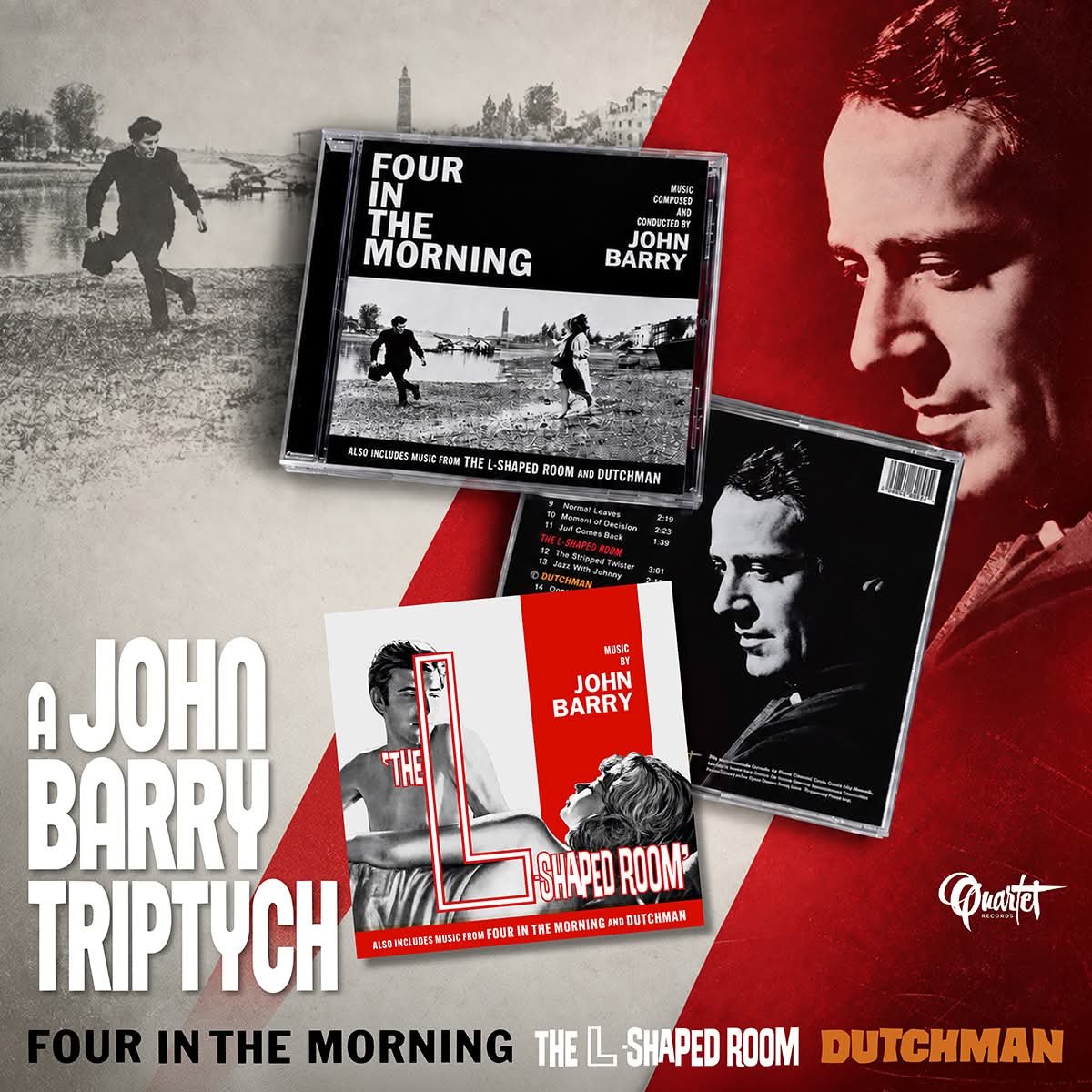
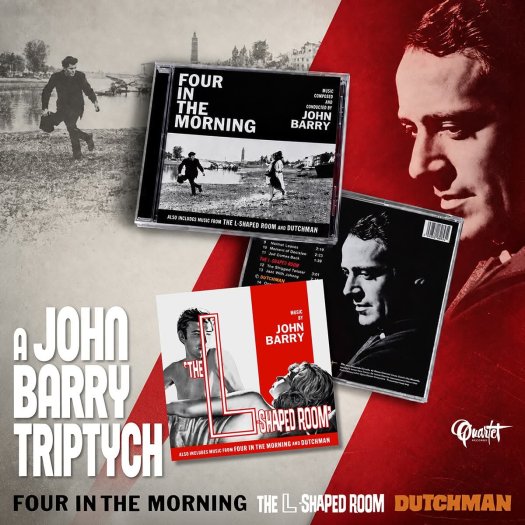
Quartet Records presents a new limited-edition CD release featuring a John Barry triptych: his scores for three acclaimed British films from the 1960s: FOUR IN THE MORNING, THE L-SHAPED ROOM and DUTCHMAN. Between 1962 and 1967, English composer John Barry scored three black-and-white films tackling serious social and cultural issues. All featured stunning performances, and all would earn acclaim—particularly on the film-festival circuit—for their excellence as drama. FOUR IN THE MORNING (1965), directed by Anthony Simmons and starring Judi Dench, features one of Barry’s most intimate scores, written for a small chamber ensemble with a particular emphasis on woodwinds and percussion. It is an introspective score in the vein of what he had composed for SÉANCE ON A WET AFTERNOON and would later continue with THE WHISPERERS. THE L-SHAPED ROOM (1962), starring Leslie Caron, marked Barry’s first collaboration with Bryan Forbes. That same year, he arranged and recorded the “James Bond Theme” for DR. NO, marking the beginning of his legendary association with the series. Although Barry wrote only two cues for the film’s party scene, THE L-SHAPED ROOM planted the seed for a fruitful collaboration with Forbes and remains an important film in the composer’s career. DUTCHMAN (1967), directed by Anthony Harvey and starring Shirley Knight. Barry would later score Harvey’s THE LION IN WINTER, one of the composer’s most celebrated masterpieces, which earned him his third Academy Award. For this intense, compact film—barely an hour long and based on the play by Amiri Baraka—Barry composed a stark, intense and distinctive theme, briefly reprised midway through the film and again over the end credits. The FOUR IN THE MORNING album has previously been released on CD several times, but for this edition it has been carefully remastered from the first-generation tapes used for the U.S. LP version, with the dialogue removed. It is presented in both true stereo—with none of the digital “fake stereo” processing heard on some of the previous editions—and mono. We have included also the mono version because it features several unique mixes and takes that make it subtly different from its stereo counterpart. THE L-SHAPED ROOM has been a genuine discovery: for the first time, the two cues Barry composed for the film are being released—and both in stereo. In the case of DUTCHMAN, the isolated music stem was the only available source, from which we have included the opening and closing titles. (The music heard midway through the film was simply an edit of the Main Title.) The album has been meticulously restored and mastered by Chris Malone and includes an in-depth essay by leading John Barry authority Jon Burlingame. Three low-budget, black-and-white British films from the 1960s, each built around an outstanding female performance, and each featuring a unique musical contribution by John Barry. All three are well worth revisiting. Tracklist FOUR IN THE MORNING (Stereo) 1. Four in the Morning 2:04 2. River Walk 2:44 3. Lover’s Clasp 1:20 4. Norman’s Return 3:15 5. River Ride 2:41 6. Four in the Morning (II) 1:58 7. Lover’s Tension 1:02 8. First Reconciliation 3:19 9. Norman Leaves 2:35 10. Moment of Decision 1:39 11. Judi Comes Back 3:01 THE L-SHAPED ROOM 12. The T-Shaped Twist 2:11 13. Jazz With Johnny 2:51 DUTCHMAN 14. Opening Titles 1:46 15. Finale 1:15 FOUR IN THE MORNING (Mono) 16. Four in the Morning 2:09 17. River Walk 2:44 18. Lover’s Clasp 1:21 19. Norman’s Return 3:16 20. River Ride 2:40 21. Four in the Morning (II) 1:59 22. Lover’s Tension 1:02 23. First Reconciliation 3:18 24. Norman Leaves 2:36 25. Moment of Decision 1:38 26. Judi Comes Back 2:59 Total Disc Time: 59:29
-
Ab dem 29.09.
-
Digital neu von BSX/DD: BSX DIGITAL presents music composed by Craig Safan (REMO WILLIAMS: THE ADVENTURE BEGINS, THE LAST STARFIGHTER, CHEERS, SON OF THE MORNING STAR) for THE STRANGER, the 1987 psychological thriller directed by Adolfo Aristarain, written by Dan Gurskis, starring Bonnie Bedelia, Peter Riegert, Barry Primus, David Spielberg, Marcus Woinsky, Cecilia Roth, Jacques Arndt, Ricardo Darin, Julio De Grazia, Milton James, Julio Kaufman, Ernesto Larrese, Sacha Favalevic and Federico Luppi. Released in 1987, THE STRANGER tells the story of a woman living in Buenos Aires who, while suffering from amnesia, gradually discovers that she is the sole surviving witness to a brutal murder. As she struggles to piece together her shattered memories, mysterious killers close in, while the authorities are unable to find any evidence that the crime ever occurred. THE STRANGER was a unique co-production between an American film studio and the Argentine government, which at the time was actively encouraging international productions to film in Argentina. Although the project represented an exciting collaboration, the film failed to make an impact in the American market. As a result, it received only a VHS release in the United States and has remained largely unavailable in any other home video format, making it one of the more elusive thrillers of the late 1980s. Composer Craig Safan joined the production during one of the busiest periods of his career. Simultaneously scoring feature films such as LADY BEWARE while working on numerous television projects, including TIME STALKERS and SECRETS OF THE TITANIC, Safan found the time to create a richly atmospheric score for THE STRANGER. The result is an evocative, dark, and suspenseful score built primarily around an array of synthesizers, including the Synclavier, whose distinctive sound became one of the score’s defining characteristics. Emmy-nominated and eight-time ASCAP award-winning composer Craig Safan has scored more than one hundred feature films, television and documentaries, has had more than 50 soundtrack albums of his music produced, as well as having three original albums of his own impressionistic music released. He’s been commissioned to compose for ballet as well as for live performance of silent films and was given the Poledouris Film Music Legend Award at the 2014 International Film Music Festival in Cordoba, Spain. BSX Digital presents the world premiere release of THE STRANGER, featuring music composed by Craig Safan. The music has been mastered by James Nelson at Digital Outland and includes liner notes by Scott Davis. Trust no one. Hear the mystery. 01. Mirrors And Lights (3:28) 02. Opening Titles (2:25) 03. First Dreamback / Escape / Crash (3:45) 04. Hospital Dreamback / No Plane / Assassin (4:13) 05. Kate And Doctor Harris / Running (2:52) 06. Hospital Chase / Dead Doctor (5:52) 07. Dreamback / Truth Serum / Love Making (6:16) 08. Stalking Kate (2:03) 09. Slight Recognition / The Body (4:33) 10. Hanger Dreamback (4:52) 11. Lights Out / Killer In The House (8:24) 12. Theatre Of Memories (6:43) 13. Final Dreamback / Meeting Reality (6:12) 14. Chase In The Morgue (6:47) 15. Move Away / Happy Ending (3:07) 16. Cafe Music (0:39) 17. Radio Music (0:24) 18. Dinner Music (2:18) Total Time: 74:53 Presenting the original soundtrack to the 2003 motion picture FRANKIE AND JOHNNY ARE MARRIED, written and directed by Michael Pressman, starring Pressman, Lisa Chess and Alan Rosenberg. The film chronicles the troubles a producer has trying to mount a production of the Terrence McNally play Frankie and Johnny in the Clair de Lune. The production is beset by one problem after another, including a hard to handle male lead (Rosenberg). This eventually results in Pressman taking on the male lead role himself. FRANKIE AND JOHNNY ARE MARRIED was scored by composer Don Peake, best known for his work for the films I DESIRE, THE PEOPLE UNDER THE STAIRS and THE HILLS HAVE EYES as well as most of the television scores for the 1984 TV series KNIGHT RIDER. A composer and session legend who defined the sound of Motown and cinematic action, Don Peake’s career spans over half a century of influential recordings and scores. 1 Clair Goes Downtown (3:59) 2 Clair de Lune (4:56) 3 Frankly (8:23) 4 Julia Gets It Again (6:51) 5 In There (3:17) 6 Reverie (1:44) 7 Reverie Jazz (6:20) 8 Bolero (2:42) 9 Brooks (0:31) 10 Canals (0:43) 11 I Know Who (3:04) Total Time: 42:48 Experience the grandeur, excitement, and inspirational spirit of the Centennial Olympic Games with MUSIC FROM THE 1996 SUMMER OLYMPICS, featuring the original music of acclaimed Emmy Award-winning composer and conductor Mark Watters. Created for the historic 1996 Atlanta Olympic Games, Watters’ music captures the pageantry, drama, triumph, and human spirit of one of the world’s greatest sporting celebrations. Performed by the Atlanta Symphony Orchestra and Centennial Olympic Chorus, these sweeping orchestral works were created to accompany some of the most memorable moments of the Atlanta Games. Among the highlights is the majestic “Faster, Higher, Stronger,” composed by Watters with lyrics by Lorraine Feather and performed by legendary soprano Jessye Norman at the Olympic Opening Ceremony. Norman’s extraordinary voice gives this stirring Olympic anthem a breathtaking emotional dimension. From the dramatic “Countdown/Samaranch” and the sweeping “The Run Through Time” to “The River,” “The Storm,” “Dignitaries Walk-On,” “Earth Rise,” and the triumphant “Faster, Higher, Stronger,” this collection presents a rare opportunity to hear the music behind the spectacle of Atlanta 1996. MUSIC FROM THE 1996 SUMMER OLYMPICS is a celebration of musical pageantry, Olympic history, and the universal ideals of excellence, achievement, unity, and hope—an essential release for Olympic enthusiasts, soundtrack collectors, and anyone who remembers the unforgettable spirit of Atlanta 1996. Countdown / Samuranch (1:40) The Run Through Time (4:21) The River (4:56) The Storm (2:29) Dignitaries Walk On (4:07) Earth Rise (2:25) Faster, Higher, Stronger Jessye Norman, Soprano Lyrics by Lorraine Feather Step up to the plate for a musical celebration of America’s national pastime! MAJOR LEAGUE BASEBALL’S MEMORABLE MOMENTS presents the original score composed by acclaimed composer Mark Watters for the 2002 Major League Baseball All-Star Game, performed by the Northwest Sinfonia Orchestra. Written to capture the excitement, drama, tradition, and timeless emotion of baseball, Watters’ sweeping orchestral score brings a cinematic dimension to the unforgettable moments that have defined the game. From the anticipation of the first pitch to the exhilaration of victory, this music celebrates baseball as both a sport and a cherished part of the American experience. This release also carries a deeply personal significance for Watters. it is dedicated to the memory of his father-in-law, Tom Vandergriff, whose lifelong love of baseball served as an important inspiration for the creation of this remarkable score. Performed with power and elegance by the Northwest Sinfonia Orchestra, this previously unreleased music offers soundtrack and sports fans alike an opportunity to experience Mark Watters’ evocative score on its own—music that transforms the excitement of the ballpark into a sweeping orchestral celebration of baseball, its history, and the memories that make the game so enduring. 01. Prologue (1:47) 02. The Early Years: Mathewson, Hubbell and Vander Meer (1:07) 03. Gehrig Retires / DiMaggio / Williams / Robinson (2:07) 04. The Shot / The Catch: Bobby Thompson And Willie Mays (1:36) 05. Maris / Paige / Clemente / Aaron (2:25) 06. Rose / Rickey / Ryan / Ripken (1:45) 07. 9/11 / Diamondbacks Victory / Finale (2:03) Alien Fury: Countdown to Invasion — Music From The Original Score The invasion begins with an unforgettable sound. Experience the thrilling music of the television movie Alien Fury: Countdown to Invasion in this original recording, featuring an electrifying score by acclaimed composers Dennis McCarthy and John Beal. Blending suspense, science-fiction atmosphere, dramatic intensity, and powerful orchestral writing, McCarthy and Beal’s music captures the mounting tension of a world on the brink of extraterrestrial invasion. From ominous revelations to pulse-pounding action and moments of human drama, the score gives Alien Fury its distinctive cinematic voice. Now, hear the music beyond the screen—a gripping collection that brings the atmosphere and excitement of Alien Fury: Countdown to Invasion directly to your speakers. Music by Dennis McCarthy and John Beal. The invasion has a score. 01. Chasing Eddie/Spacecraft Photo (5:28) 02. Pentagon/Strike Decision (5:12) 03. Chasing Buzz/Invasion Hoax (6:05) 04. Riot/Alien Phones Home (5:53) 05. Bill Runs From MIBs/Not A Hoax (3:36) 06. Alien Autopsy/Kevin Trapped (6:34) 07. Alien Revealed/Kevin Escapes (6:01) 08. Mocking Earth/Kevin Kills Ava (7:23) 09. Countdown/Alien Bodies/Closing Credits (7:16) 10. Closing Credits (Dance Version) (1:55) 11. Kevin Escapes (Alternate Version) (3:17) 12. Bumper Suite (0:27)